
In this article
Many families ask about hijama. It is part of Muslim tradition, and it is easy to find at clinics. Before you book, it helps to know what it is, what research says, and how to keep it safe.
This guide is general information. It is not a replacement for medical care.
#What is hijama (cupping) therapy?
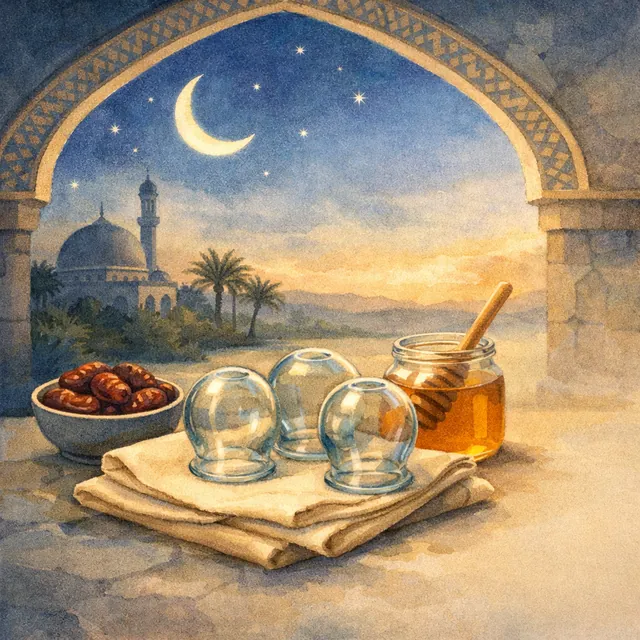
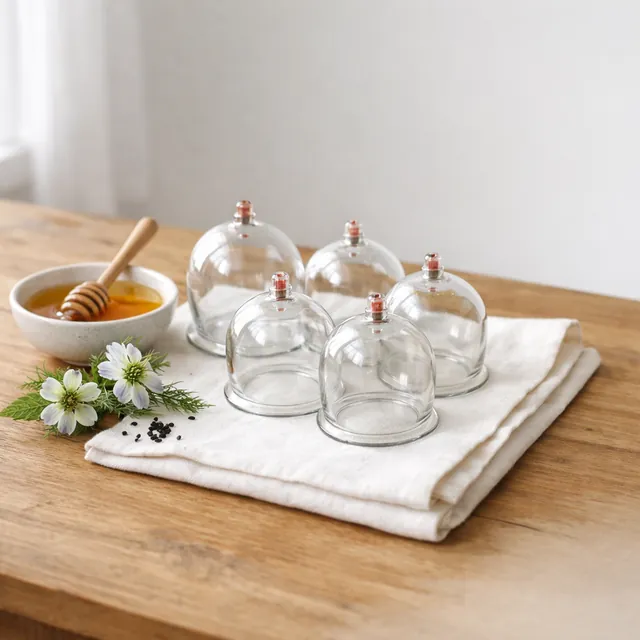
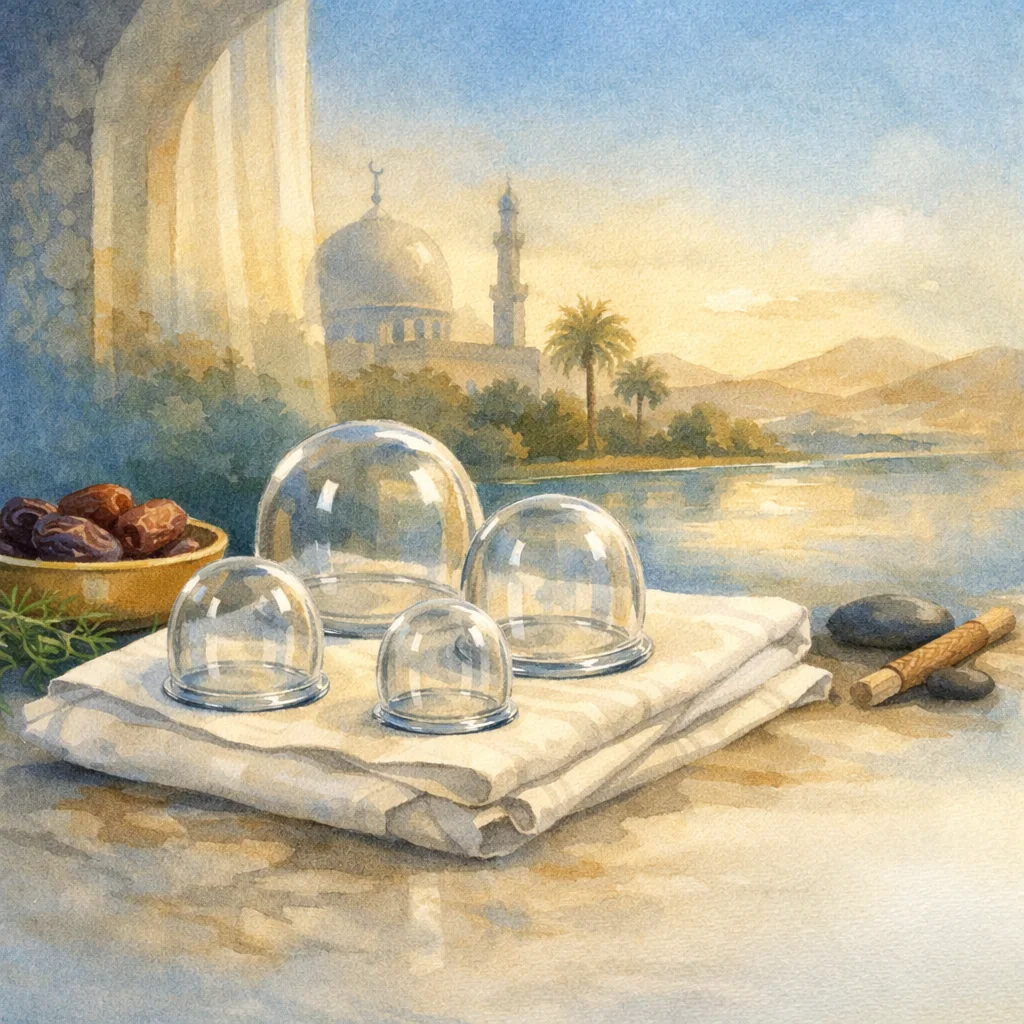
Cupping is used in traditional medicine in several parts of the world, including China and the Middle East. A cup of glass, ceramic, bamboo or plastic is placed on the skin. Suction is made inside the cup. This is done either by warming the cup with a flame before it is placed, or by drawing out the air with a pump.
In Muslim communities the practice is called hijama, and many people follow it as a Sunnah-based practice. If you have a question about the religious side, please ask a qualified scholar.
#What is the difference between dry and wet cupping?
In dry cupping the cup is placed on the skin and the skin is not cut. In wet cupping the skin is pierced with sterile equipment, and a small amount of blood flows into the cup.
Wet cupping carries more risk because blood is involved. That is why clean equipment matters so much.
#What does the research say?
The NCCIH, part of the US National Institutes of Health, says there has been some research on cupping, but most of it is of low quality. Cupping may help reduce pain, but the evidence for this is not strong. There is not enough good research to say whether it helps other conditions.
For this reason we do not call hijama a cure, and it does not replace a doctor's treatment. People choose it for different reasons, including faith and tradition. An honest practitioner will tell you the same, and will not promise you a result. The method also varies from one practitioner to another, so ask how your session will be done.
#What are the risks?
Cupping leaves temporary marks on the skin. The NCCIH also lists these possible side effects:
- Skin colour changes that last, scars and burns
- Infection
- Eczema or psoriasis getting worse
- In rare cases, serious problems such as bleeding inside the skull after cupping on the scalp, or anaemia after repeated wet cupping
If a doctor sees cupping marks, tell them where they came from, so the marks are not misread.
#What happens in a session?
A session usually follows the same steps:
- Consultation. The practitioner asks about your health and medicines, and looks at the skin. They may tell you that hijama does not suit you, or advise you to see a doctor first.
- Preparation. The area is chosen and cleaned, and you are settled comfortably.
- Cups. Suction pulls the skin gently into each cup. You will feel tightness or pulling. Tell the practitioner at once if it is too strong, because it can be adjusted.
- Wet cupping only. Shallow cuts are made with sterile equipment before the cups go back on.
- Finishing. The cups come off, the skin is cleaned, and you rest for a while before you leave.
Never try cupping at home or without a trained practitioner, because it can be dangerous.
#Who should be careful?
Hijama is not right for everyone. Speak to your doctor first if you are unwell, if you have a long-term illness, or if you take regular medicines. The NCCIH says cupping may make eczema or psoriasis worse, so people with these skin conditions should be especially careful.
If you are not sure, ask. A good practitioner will not mind the question. They will tell you honestly whether hijama suits you, and they will never promise a result.
Hijama is not recommended for infants and young children. It is also not advised for older adults, people with a bleeding disorder (such as haemophilia), people who take blood thinners, people with a blood-sugar problem, a weak immune system, or serious heart, kidney or liver disease, unless their own doctor says it is safe. Do not have cupping on skin that is infected, has an open wound, or has an active skin disease.
#How can you make a session safer?
- Choose a trained practitioner in a clean, tidy room.
- Ask whether the equipment is new or sterilised for every person.
- Tell the practitioner about skin conditions such as eczema or psoriasis, any bleeding problem, and the medicines you take.
- See a doctor first if you are unwell or have a long-term illness. Hijama is not a substitute for medicine.
- Afterwards, keep the skin clean. Contact a doctor if you see pus, spreading redness, a burn or a fever.
Our guide on what to expect at your first session walks through the visit step by step.
Go to a hospital or call 999 if you have bleeding that does not stop, a high fever with confusion or weakness, redness or swelling that spreads fast, swelling of the lips, face or tongue, trouble breathing, or you feel very unwell after a session.
#What to do next
At Salamah Care, hijama therapy starts with a consultation with a trained practitioner. We use sterile equipment in a clean chamber in Mohammadpur, Dhaka.
Read more on our hijama therapy page. Then contact us or call 01327-808822 to ask a question or book a session.
Frequently asked questions
Is hijama a cure for disease?
No. Research on cupping is limited, and it is not a cure for any disease. It does not replace a doctor's care or your medicines.
What is the difference between dry and wet hijama?
In dry cupping the skin is not cut. In wet cupping the skin is pierced with sterile equipment and a little blood flows into the cup, so clean equipment matters even more.
Will cupping leave marks?
Yes. Cupping leaves temporary marks on the skin. If you see a doctor, say that the marks come from cupping so they are not misread.
Who should talk to a doctor before hijama?
Anyone who is unwell or has a long-term illness. People with eczema or psoriasis should be especially careful, because cupping may make these worse.
Sources & further reading
Medical disclaimer. This article is for general information and does not replace advice from a qualified doctor. If you have symptoms, pain or a health concern, please see a clinician. In an emergency call 999.