

In this article
Booking your first hijama session can bring a mix of curiosity and nerves. What exactly will happen? Will it hurt? How should you get ready? Knowing the steps in advance makes the visit calmer and safer, and helps you ask the right questions.
This guide from the Salamah Care Clinical Team in Mohammadpur walks you through a first hijama (cupping) session, from preparation to aftercare.
#What is hijama, and what can you realistically expect from it?
Hijama is a traditional form of cupping. Cups are placed on the skin and suction is created, either on the surface only (dry cupping) or followed by tiny, shallow cuts so that a small amount of blood is drawn (wet cupping, which is what most people mean by hijama). Many Muslims value it as a Sunnah-based practice, since cupping is mentioned in the traditions of the Prophet Muhammad (peace be upon him).
It is important to be honest about what hijama is not. It is not a cure for any disease and it does not replace medical care. Scientific research on cupping is limited and mixed, so a responsible practitioner will never promise results. If you have a health condition, continue your treatment and tell your doctor about your plans. For a wider introduction, read our article The Power of Hijama Therapy.
#How should you prepare before your first session?
A little preparation helps the session go smoothly:
- Eat lightly. Have a light meal beforehand rather than a heavy one, and avoid coming very hungry. Ask the practitioner if you follow a special diet.
- Drink water during the day so you are well hydrated.
- Make a short list of your regular medicines, health conditions and allergies, and bring any recent medical reports.
- Choose a calm time. Avoid rushing straight from work or traffic.
- Write down your questions about the method, the equipment and the aftercare.
#What happens during the session, step by step?
- Consultation. The practitioner asks about your health, your medicines and why you want hijama, and looks at the skin where cups will be placed. They will tell you whether hijama seems suitable, and may advise you to see a doctor first.
- Preparation. The area is chosen and cleaned, and you are settled comfortably.
- Cups are placed. Air is drawn out of each cup so that the skin is gently pulled into it. You will feel tightness or pulling. Tell the practitioner at once if it is too strong, because the suction can be adjusted.
- Wet cupping only. After the first cups are lifted, shallow cuts are made with a sterile blade and the cups are placed again to draw a small amount of blood. Do not hesitate to ask that any blade is new and single-use, and that anything reusable is properly sterilised.
- Finishing. The cups are removed, the skin is cleaned and covered if needed, and you rest and sip water before you leave.
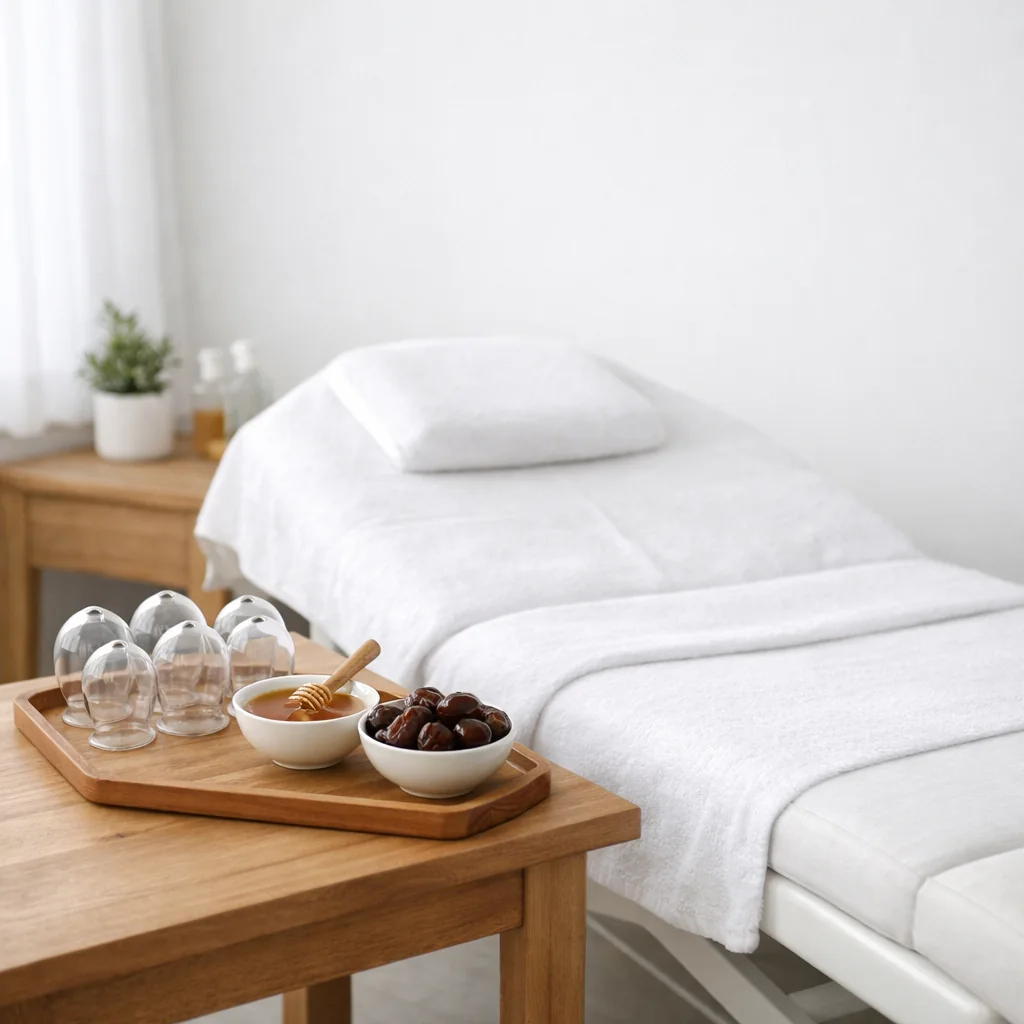
At Salamah Care, sessions take place with a trained practitioner in a clean, air-conditioned chamber, using sterile equipment.
#Will it hurt, and how will your skin look afterwards?
Most people describe tight pulling or pressure rather than sharp pain, although experiences differ from person to person. Round marks where the cups were placed are common. They usually fade on their own over days to a couple of weeks. Some people feel tired, light-headed or sleepy afterwards, so give yourself time to rest before you travel home.
#What should you do after the session?
- Rest for the remainder of the day and avoid heavy exercise.
- Drink water and have a light meal.
- Keep the treated area clean and dry as the practitioner advises, and do not scratch or pick at it.
- Follow the practitioner's own instructions and ask when, or whether, another session makes sense for you.
#When should you talk to a doctor first, and when should you seek help afterwards?
Talk to your doctor before hijama if you:
- have a bleeding disorder or take blood-thinning medicine,
- have a skin infection, an open wound or a skin condition near the area,
- feel unwell or have a fever,
- live with a serious long-term condition such as a heart, kidney or blood-sugar problem.
After the session, seek medical care promptly if bleeding does not stop with gentle pressure, if redness, warmth, swelling, pus or pain keeps increasing, if you develop a fever, or if you faint or feel severely dizzy.
#Book your first hijama session
Salamah Care offers hijama therapy for male and female patients, at our chamber in Mohammadpur and as a home service. Call 01327-808822, message us on WhatsApp, or use our contact page. Our team will answer your questions and explain how to prepare before you come.
Frequently asked questions
Does hijama hurt?
Most people feel pulling or pressure rather than sharp pain, although experiences differ. The suction can be adjusted, so tell the practitioner straight away if anything is uncomfortable.
What should I eat before hijama?
A light meal is usually best. Avoid a heavy meal and avoid coming very hungry, and follow the practitioner's advice if you have special dietary needs.
How often can I have hijama?
No single schedule suits everyone. The practitioner will advise you after the consultation, and your doctor can guide you if you live with a medical condition.
Can hijama replace my medicine?
No. Hijama does not replace medical care. Continue any treatment your doctor has prescribed and tell your doctor that you plan to have hijama.
Is hijama available as a home service?
Yes. Salamah Care offers hijama as a home service as well as at the chamber in Mohammadpur, for male and female patients. Call 01327-808822 to arrange it.
Sources & further reading
Medical disclaimer. This article is for general information and does not replace advice from a qualified doctor. If you have symptoms, pain or a health concern, please see a clinician. In an emergency call 999.