
In this article
Pain and stiffness can take over a whole day. Many people wait and hope it will pass, and then find that moving has become harder than before. Physiotherapy is one steady way back to movement.
This guide explains what physiotherapy is, who it can help, and what happens at the first visit.
#What is physiotherapy?
The NHS describes physiotherapy as a treatment that can ease pain and improve movement if you have an injury, illness or disability. It uses exercise, massage and other techniques.
The World Health Organization uses a wider word, rehabilitation. It means helping a person to be as independent as possible in everyday activities, such as walking, eating, dressing and taking part in family life.
#Who can physiotherapy help?
People of all ages can have physiotherapy, including children and older people. The NHS lists problems such as:
- Bone, joint and muscle problems, for example arthritis, back pain, neck pain, sprains and strains
- Trouble moving after a stroke, or with conditions such as Parkinson's disease
- Weakness and stiffness after surgery
If you work at a desk, our guide on back pain and daily habits has simple things to try. If someone in your family is recovering from a stroke, read about home physiotherapy after a stroke.
#What happens at the first visit?
The first visit is mostly listening and checking. The physiotherapist asks about your symptoms, your medical history and your daily life. They may feel the sore area and check your strength and balance.
Then they explain the options and how many sessions you may need. At Salamah Care each patient is assessed first, then given realistic goals and a clear exercise plan.
#How is a plan built?
A good plan starts from your own goals. You may want to walk to the mosque again, climb the stairs at home, or sit at your desk without pain. The physiotherapist turns that wish into small steps.
Each step has a clear exercise and a clear aim. As you improve, the exercises change. If something does not help, the plan changes too. Ask your physiotherapist to explain the goal of each exercise. When you know why you are doing it, it is easier to keep going.
#What does treatment include?
Treatment depends on the problem. It may include:
- Exercises to move the joints better and strengthen the muscles
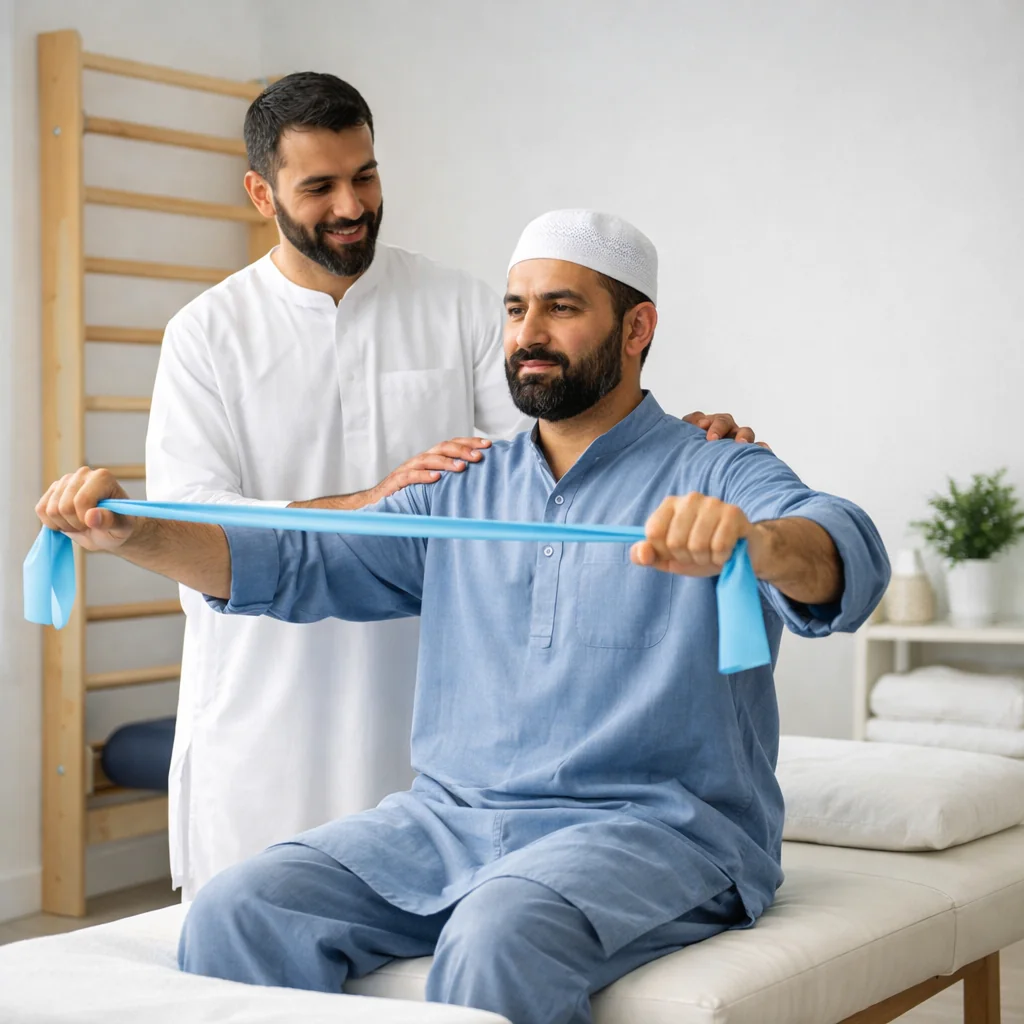
- Manual therapy, where the physiotherapist uses their hands to massage and ease movement in the affected area
- Advice on how to manage your symptoms in daily life
- Exercises to do at home between visits
When a family member helps with care, the physiotherapist can also show safe ways to help with exercises, positioning and daily tasks.
#Why do home exercises matter?
The NHS says it is important to do your home exercises regularly, because they support recovery between sessions. A visit once or twice a week cannot do all the work alone.
Pick a fixed time, for example after a prayer or after a meal, so the exercises become a habit. If an exercise causes sharp pain or a new symptom, stop and tell your physiotherapist.
Ask the physiotherapist to write the exercises down, and to check how you do them at the next visit. Small mistakes in how you move can slow your recovery. A short check each time keeps you on the right path.
#What about physiotherapy at home?
Some people cannot travel easily, because of pain, a stroke, surgery or age. The NHS notes that if your condition prevents you from getting to a clinic, a physiotherapist may be able to visit you at home.
For a home visit, it helps to prepare a clear space with a firm chair, and to wear loose, comfortable clothes. Keep your medicines and any reports or X-ray papers ready to show. If a family member will help with exercises, ask them to be there for the first visit.
#When should you see a doctor first?
Physiotherapy does not replace a doctor's diagnosis. If you are not sure what is causing your pain, a doctor should see you before treatment starts.
#What to do next
Salamah Care physiotherapists work at our chamber in Mohammadpur and visit homes in Dhaka for people who find travel hard. Home visits are available for male and female patients.
Read more on our physiotherapy page or the home physiotherapy page. Then contact us or call 01327-808822 to book an appointment.
Frequently asked questions
How many physiotherapy sessions will I need?
It depends on the problem. After the first assessment, the physiotherapist explains your options and how many sessions you may need.
Is physiotherapy only for sports injuries?
No. It helps with back and neck pain, joint pain, and recovery after surgery or a stroke. People of all ages, including children and older people, can have it.
Can physiotherapy be done at home?
Yes, for people who find travel hard. Salamah Care physiotherapists visit homes in Dhaka, for male and female patients.
Do I really need to do the exercises at home?
Yes. The NHS says regular home exercises are important for recovery. A session alone cannot do all the work, so a short daily routine helps a great deal.
Sources & further reading
Medical disclaimer. This article is for general information and does not replace advice from a qualified doctor. If you have symptoms, pain or a health concern, please see a clinician. In an emergency call 999.
Need physiotherapy in Dhaka?
Talk to the Salamah Care team in Mohammadpur. We will listen, explain your options clearly and guide you to the right care.