
In this article
You reach the stairs at home or at the mosque, and your knee complains with every step. Many people in Dhaka know this feeling. Going upstairs asks a lot of the knee, so it is often the first place the trouble shows.
Knee pain going upstairs is usually not an emergency. In most cases it can be eased with simple habits and gentle strengthening. This guide explains the common causes, what you can try at home, and when to see someone.
#Why does the knee hurt on stairs?
On each step, the knee bends and then lifts your whole body weight. That is a heavy job for a small joint. Here are the usual reasons it hurts.
- Pain at the front of the knee. This is often called patellofemoral pain. It is felt around or behind the kneecap. Stairs, squatting and sitting for a long time can make it worse. It often starts without any injury.
- Worn joint surfaces (osteoarthritis). The smooth cover on the bones thins over the years. The knee feels stiff in the morning and aches after activity.
- Weak muscles. The thigh and hip muscles share the load with the knee. When they are weak, the knee takes more of the strain.
- Overuse or a sudden increase in activity. A long walk, a new job with many stairs, or a quick return to sport can irritate the knee.
- An old or new injury. A twist or a fall can hurt the cartilage or the ligaments.
The cause matters, because the plan depends on it. A physiotherapist can find it by asking about your pain and examining the knee.
#What helps knee pain from stairs at home?
Start with small changes. They cost nothing.
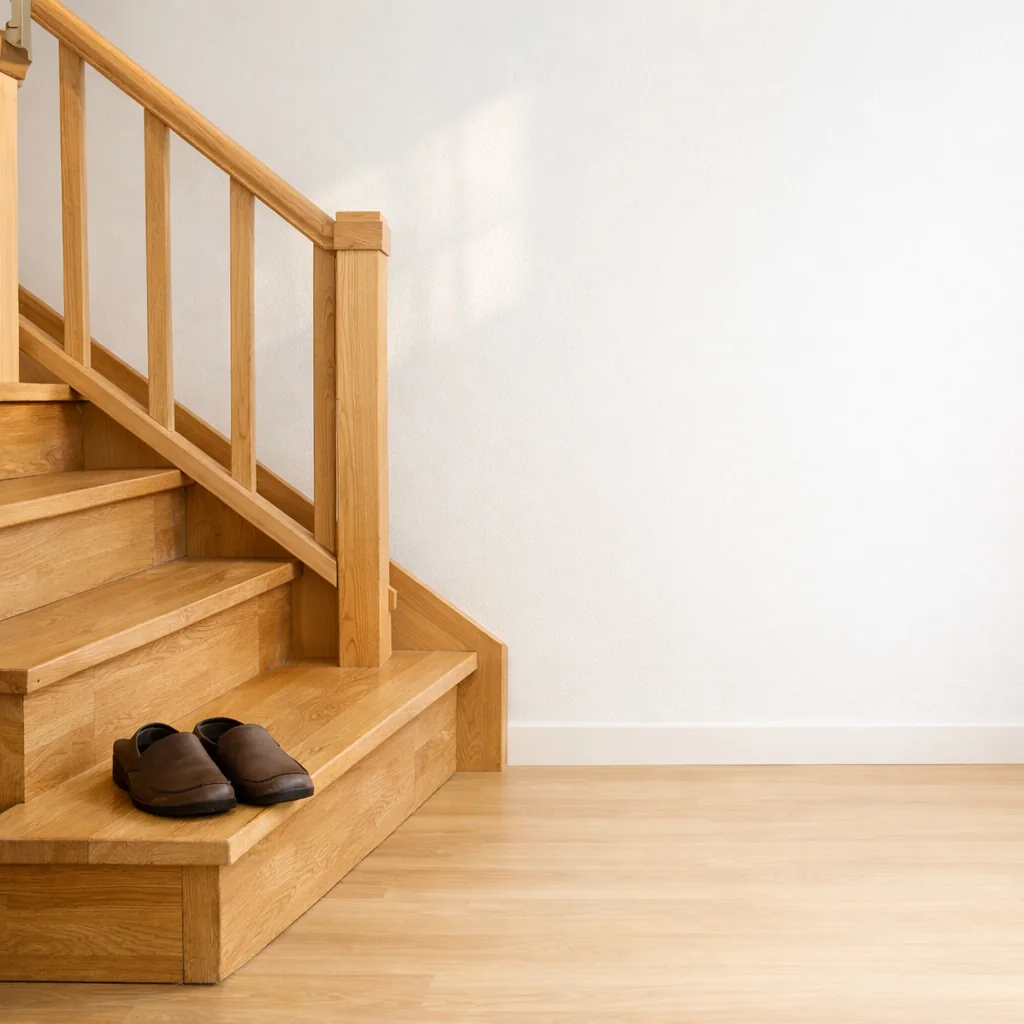
- Hold the handrail and take one step at a time.
- When going up, lead with the stronger leg. When coming down, lead with the sore one. Go slowly.
- Avoid deep squatting and long periods of kneeling while the knee is sore.
- Keep moving. Short, easy walks are usually better than complete rest.
- Build up activity slowly. Do not jump from nothing to a long walk.
#Gentle strengthening exercises for the knee
Strong muscles take the pressure off the knee. These exercises are easy to learn. Do them slowly, on a firm surface, and stop if the pain becomes sharp.
- Sit-to-stand. Sit on a sturdy chair. Stand up slowly, then sit down slowly. Use your hands for support if you need to.
- Straight leg raise. Lie on your back with one knee bent. Tighten the thigh of the straight leg, lift it a short way, hold for a moment, and lower it slowly.
- Glute bridge. Lie on your back with both knees bent. Lift your hips, hold for a moment, and lower. This works the hips.
- Step-up on a low step. Hold a rail. Step up with one leg and lower slowly. Use a very low step first.
Do them regularly, usually most days, and give the muscles several weeks to respond. Strength does not come overnight. If an exercise hurts more each time, stop and ask a physiotherapist to check your form.
#How can knee pain physiotherapy help?
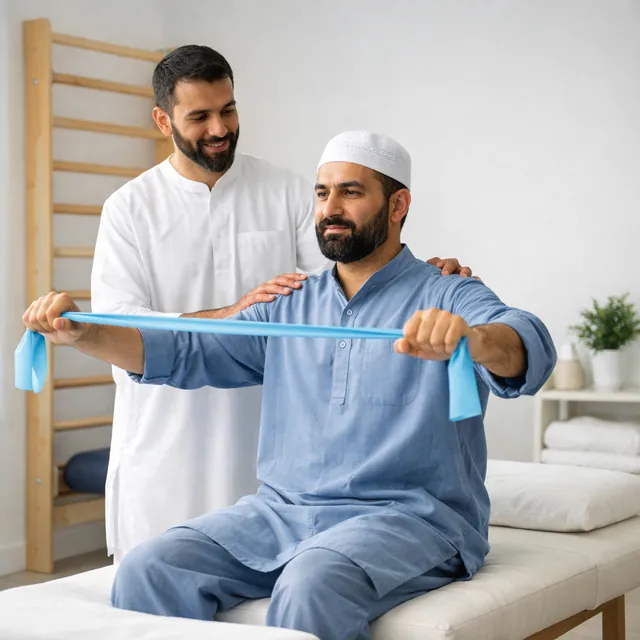
Knee pain physiotherapy begins with finding the cause. Your physiotherapist asks when the pain started and what makes it worse. They look at how you walk, bend and climb. Then they plan exercises that suit your knee, your work and your daily routine.
The plan may include strengthening, stretching, advice on stairs and daily tasks, and a gradual return to the activities you enjoy. The programme is made for you, so it is better than copying a list from the internet. Our physiotherapy service in Mohammadpur, Dhaka, offers assessment and a personal exercise plan. If climbing stairs or travelling is hard for you, our home physiotherapy team visits homes across Dhaka City.
If your neck or back also bothers you, you may like our guide on neck pain from your phone or back pain at a desk job.
#When should you see a doctor about knee pain?
Most knee pain on stairs is not dangerous. But some signs need a prompt check.
Also get it checked if the pain has not improved after a few weeks of gentle care. A doctor may decide whether a scan is needed. Scans are not needed for every sore knee, and this is a decision for your doctor.
#What to do next
Start with the stair habits and two or three exercises today. If the pain stays or you are unsure, book a visit. Call 01327-808822 or contact the Salamah Care team to arrange a physiotherapy assessment.
Frequently asked questions
Why does my knee hurt going upstairs but not on flat ground?
Stairs put much more load on the knee than walking on flat ground. A knee with a weak muscle or an irritated joint often hurts first on stairs. This is common and can often be improved with strengthening.
Is knee pain going upstairs a sign of arthritis?
It can be, but not always. Pain at the front of the knee, weak muscles and overuse cause the same problem. A physiotherapist or doctor can tell which one it is.
Can physiotherapy help knee pain on stairs?
Knee pain physiotherapy often helps. It combines a check of the cause, strengthening exercises and advice on daily movement. Results differ from person to person, and we do not promise a cure.
Should I rest my knee completely?
Complete rest is usually not helpful for long. Gentle movement keeps the joint and muscles working. Rest from the activity that causes sharp pain, and see a doctor if the pain is severe.
Sources & further reading
Medical disclaimer. This article is for general information and does not replace advice from a qualified doctor. If you have symptoms, pain or a health concern, please see a clinician. In an emergency call 999.
Need physiotherapy in Dhaka?
Talk to the Salamah Care team in Mohammadpur. We will listen, explain your options clearly and guide you to the right care.