
In this article
Your father walks to the bathroom at night. The floor is wet, the light is off, and one slipper is loose. Nothing has happened yet. But this is exactly how many falls begin.
A fall can change an older person's life. A broken hip or a hurt wrist can mean weeks in bed and a loss of confidence. The good news is simple. Most falls at home have a cause you can see, and many of those causes can be fixed in an afternoon.
#How common are falls in older age?
The World Health Organization says that about 28% to 35% of people aged 65 and over fall each year. For people over 70 the figure is 32% to 42%. WHO also lists poor balance, weak muscles, poor eyesight and some medicines as common risk factors. It recommends home checks and balance and strength training as ways to lower the risk.
So a fall is not just bad luck. It has reasons, and you can work on them.
#Room-by-room home safety checklist
Walk through the house slowly, as if you were your parent. Look at the floor, the light and what is within reach.
#Floors and walkways
- Remove loose mats and rugs, or fix them firmly to the floor.
- Keep walking paths clear of shoes, bags, wires and small furniture.
- Wipe spills at once. Wet tiles are very slippery.
- Repair broken or uneven tiles and door thresholds.
#Lighting
- Put a light in every hallway, on the stairs and near the bathroom.
- Keep a small night light on for the walk from bed to bathroom.
- Place the light switch where your parent can reach it before stepping into a dark room.
#Stairs and steps
- Fit a firm handrail on at least one side, and on both sides if you can.
- Keep every step clear. Do not store things on the stairs.
- Make sure the edge of each step is easy to see.
#Bathroom
- Use a non-slip mat inside the shower area and outside it.
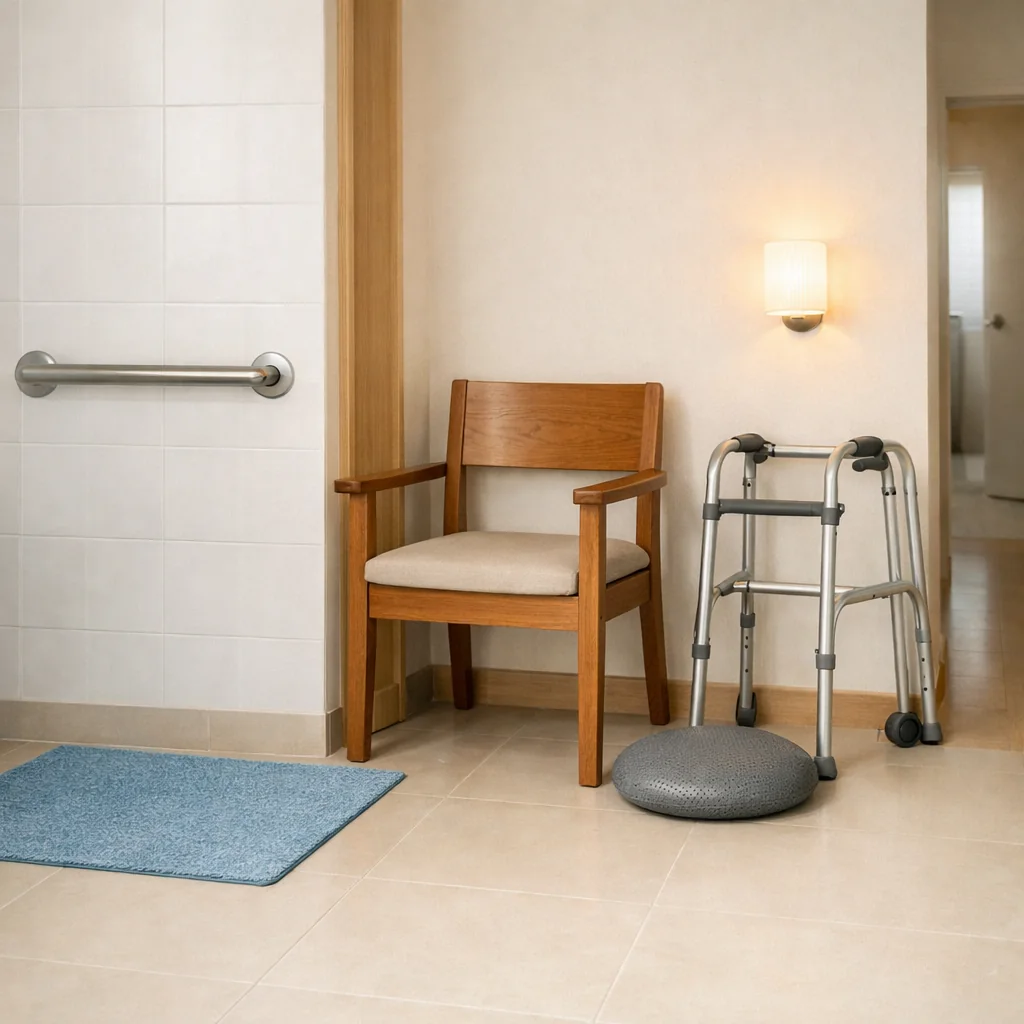
- Fix a grab bar near the toilet and in the shower, screwed into the wall. A towel rail is not a grab bar.
- Keep soap, water and a stool within easy reach so your parent does not have to stretch or bend far.
- Keep the floor as dry as you can.
#Bedroom and sitting room
- Keep the bed at a height where your parent can sit down and stand up with feet flat on the floor.
- Keep a lamp, a glass of water and glasses (if used) near the bed.
- Use a chair with arms. It helps when standing up.
- Keep things used every day at waist or shoulder height, so no one has to climb or bend.
#Footwear
- Choose shoes or sandals that fit well, have a firm sole and a back strap.
- Avoid loose slippers, socks alone on tile floors and worn-out soles.
- Do not wear long, loose clothes that can catch on a step or a door.
#Habits that lower the risk of falls
A safe house helps. A strong, steady body helps even more.
- Move every day. Short, regular walks are better than rare long ones.
- Stand up slowly. Sit for a moment on the edge of the bed before standing. Some people feel dizzy when they rise too fast.
- Ask about medicines. Some medicines cause drowsiness or dizziness. Ask your doctor about this. Never stop or change a medicine on your own.
- Check eyesight and glasses. Old glasses can make steps and edges hard to see.
- Drink enough water, unless a doctor has told you to limit fluids.
Balance and strength exercises are among the best ways to prevent falls. They are not all the same, though. The right exercise depends on your parent's age, joints, heart and past injuries. A physiotherapist can check balance and walking, choose safe exercises and show the family how to help. Do not start a hard programme without that advice.
#How home physiotherapy can help
Many older people find it hard to go out for treatment. That is why a home visit can be useful. At home, a physiotherapist can see the real stairs, the real bathroom and the real bed. Then the advice fits your house, not a book.
Salamah Care offers home physiotherapy for male and female patients in Dhaka. A visit can include a check of balance and walking, simple exercises that suit your parent, and advice on how the family can make the home safer. If your parent is recovering after a stroke, the guide on home physiotherapy after a stroke explains how families can help.
Cold months can make joints stiff and movement harder. You may also like our post on winter health tips for Bangladesh.
#What to do next
Pick one room today. Fix the loose mat, change the bulb, or fit the grab bar. Then do the next room tomorrow. Small steps add up.
If you want a professional to look at your parent's balance and walking at home, contact Salamah Care in Mohammadpur, Dhaka, or call 01327-808822 to ask about a home visit.
Frequently asked questions
What is the most common cause of falls in older people at home?
There is rarely one cause. Slippery or cluttered floors, poor lighting, a wet bathroom, bad footwear, weak muscles and poor balance all play a part. Medicines that cause dizziness can add to the risk. Fixing the visible hazards first is a good start.
Can exercise really prevent falls?
WHO lists balance and strength training among the ways to lower fall risk in older adults. The right exercises depend on your parent's health, so ask a physiotherapist or doctor before starting.
When should an elderly person see a doctor about falls?
See a doctor if your parent has fallen before, feels unsteady, is afraid to walk, or has new dizziness or weakness. After a fall, go for urgent care if there is severe pain, a swollen limb, a head injury, confusion or trouble moving.
Does Salamah Care offer physiotherapy at home?
Yes. Salamah Care offers home physiotherapy for male and female patients in Dhaka. Call 01327-808822 or use the contact page to ask about a visit.
Sources & further reading
Medical disclaimer. This article is for general information and does not replace advice from a qualified doctor. If you have symptoms, pain or a health concern, please see a clinician. In an emergency call 999.
Need home physiotherapy in Dhaka?
Talk to the Salamah Care team in Mohammadpur. We will listen, explain your options clearly and guide you to the right care.