

In this article
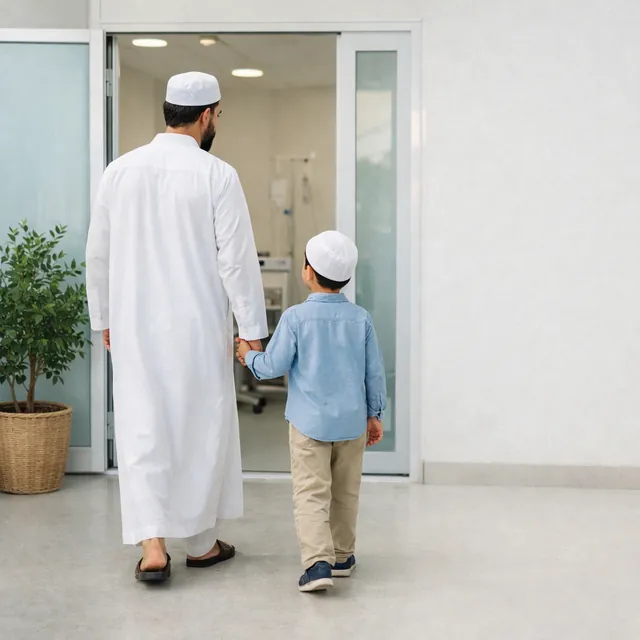
Your son's khotna is done, and you are home. Now the questions begin. Is this much soreness normal? When can he play? What should I watch for? These are good questions, and the answers are simple.
First, one thing. Your doctor's own instructions come before anything written here. This guide gives the general picture that hospital care sheets describe. Every child heals at his own pace.
#What is normal in the first few days?
The area may be sore, swollen and a little bruised. Your child may be fussy and may sleep badly for a night or two. In an older child, a little blood at the edge of the wound can also happen.
Most children are ready for normal, quiet activity in about 2 or 3 days. Some take a little longer. Do not compare him with a cousin or a friend. Each child is different.
It helps to tell your child, in simple words, what is happening. A boy who knows that the soreness will ease, and that his parents are close by, usually settles faster. Keep the routine of the house as normal as you can: meals, prayer times, bedtime.
If something looks strange and you cannot tell whether it is normal, call the doctor and ask. It is never a waste of his time.
#A simple guide to the first weeks
| When | What usually happens | What you do |
|---|---|---|
| First day | Soreness, fussiness, some swelling | Let him rest. Give plenty of fluids. Keep clothes loose. |
| Day 2 to 3 | Many children return to light, normal activity | Keep play gentle. Keep the area clean and dry. |
| Day 3 to 5 | Not back to normal activity yet? | Call your doctor. |
| Week 2 to 3 | Bruising should be getting better | Call your doctor if it is not. |
| Week 3 to 4 | Hard exercise and sit-on toys still wait | Ask your doctor before he starts again. |
#How do you keep the area clean and comfortable?
Care at home is plain and quiet. Follow your doctor's instructions first. If you were given none, this is the general advice.
- Wash your hands before you touch the area.
- Wash the area once a day with warm water and pat it dry. Do not use hydrogen peroxide or other harsh antiseptic liquids, because they can slow healing.
- If the area weeps or rubs against clothing, your doctor may advise a thin layer of ointment and a light gauze cover. Change it every day, and sooner if it gets wet, bloody or dirty.
- Choose loose, soft cotton underwear and trousers, so that nothing rubs the area.
- Give plenty of fluids on the first day. A change in bowel habits right after the procedure is common.
Look at the area once a day, when you wash it. You are not looking for a perfect picture. You are looking for change: more swelling, more redness or more pain than the day before. A wound that is a little better each day is healing. One that is getting worse needs the doctor.
Note: Give pain medicine only as your doctor has told you. Ask which medicine and how much. Do not give aspirin to children or teenagers.
Many families also make a short dua for their child's ease and healing. A quiet room, a favourite story and a parent close by help more than most people expect.
#What should your child avoid in the first weeks?
Let him rest for a few days. Avoid tumbling and rough play for a few days.
For 3 to 4 weeks, general guidance says to avoid sit-on toys and anything he must sit astride, such as a tricycle. It also says to avoid hard exercise, sports and running for the same time. Ask your doctor when a bath or swimming is fine, and when he may go back to school.
Nothing here is a punishment. It only gives the skin the quiet time it needs.
#When should you call the doctor?
- Pain that does not get better after pain medicine.
- Fever.
- A wound that opens, or loose stitches.
- Bleeding that is more than a small spot.
- Red streaks, or pus from the wound.
- Trouble passing urine.
- No bowel movement after a couple of days.
- Bruising that is not getting better after 2 to 3 weeks.
- Not back to normal activity after 3 to 5 days.
If your child faints or has severe trouble breathing, get emergency help at once.
#What to do next
Salamah Care in Mohammadpur, Dhaka, offers device cosmetic circumcision (khotna) for children. If you have a question about healing, contact us or call 01327-808822. If the khotna is still ahead of you, read Preparing Your Child for Khotna.
A few quiet days, a clean wound and a watchful parent are most of the work. The rest your child's body does by itself.
Frequently asked questions
How long does circumcision take to heal?
Each child heals at his own pace. General guidance says normal activity often returns in 2 or 3 days, and hard exercise waits 3 to 4 weeks. Your doctor will tell you what to expect for your child.
When can my child bathe or swim after khotna?
It depends on how the doctor treated your child, so ask. Do not guess. Until you hear from the doctor, keep the area clean and dry as described above, and avoid swimming.
Is a little bleeding normal after circumcision?
A little blood at the edge of the wound can happen, especially in an older child. Bleeding that is more than a small spot is not something to wait on. Call your doctor right away.
What can I give my child for pain?
Give pain medicine only as your doctor told you, and ask which medicine and how much. Do not give aspirin to children or teenagers. If the pain does not get better after the medicine, call the doctor.
Sources & further reading
Medical disclaimer. This article is for general information and does not replace advice from a qualified doctor. If you have symptoms, pain or a health concern, please see a clinician. In an emergency call 999.
Need cosmetic circumcision (khotna) in Dhaka?
Talk to the Salamah Care team in Mohammadpur. We will listen, explain your options clearly and guide you to the right care.